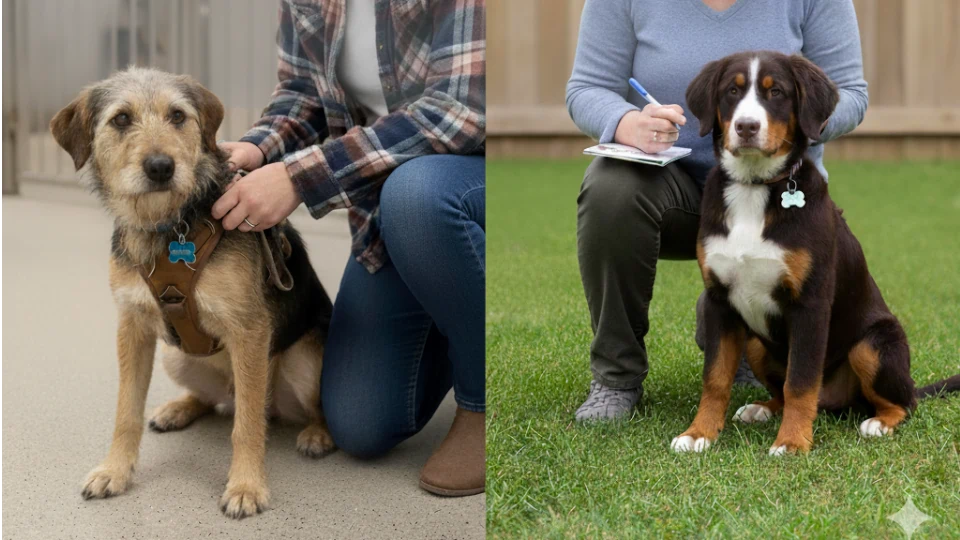
If you’ve been thinking about getting a dog, you’ve probably seen that slogan somewhere : “Adopt, don’t shop.” It’s everywhere. And while it comes from a good place, it’s also a bit of a guilt trip, isn’t it?
If you’ve found yourself feeling bad about wanting to buy a dog from a breeder, let me tell you straight: you don’t need to feel guilty.
It’s completely okay to, after doing your research, decide that a specific breed suits your lifestyle. It’s okay to want to raise a puppy from the start, to be there during those crucial early imprinting weeks. And it’s absolutely okay to choose a puppy whose temperament and energy level align with your goals.
Owning a dog isn’t a 3-month hobby; it’s a 10- to 15-year commitment. You owe it to both yourself and the dog to set things up for success. Sometimes, that means adopting a rescue. But sometimes, it means getting a well-bred puppy, from healthy, stable parents, raised under the guidance of an ethical breeder who screens their dogs for temperament and genetics.
Shelters mean well, and I have a huge amount of respect for what they do. I’ve supported them myself, and I’ve lived the experience of adopting a rescue. But shelters have their own priorities: rehoming dogs in need. They don’t live in your house, with your kids, or within your lifestyle. You do.
Here’s something few people say out loud: If everyone had gone to ethical breeders from the start, there would actually be fewer dogs in shelters today.
Because a good breeder doesn’t just sell dogs: they guide people. They’ll tell you to your face when a breed doesn’t suit your lifestyle, and they’ll refuse a sale if it’s not a good fit.
So yes: Shop! But shop responsibly.
And when a breeder says, “A Malinois isn’t for you,” don’t argue: listen, digest, and recalibrate your wants. Don’t go searching for a €300 Malinois from a guy meeting you in a parking lot. That’s exactly how dogs end up unstable, misunderstood, and eventually surrendered.
Ethical breeders and shelters both serve a purpose: one prevents problems, the other tries to fix them.
We need both. But guilt shouldn’t be what drives your decision.
Commitment, education, and honesty should. Because at the end of the day, the right dog for you is the one you’re ready to commit to, fully, fairly, and for life.
If you want to start your puppy-phase on the right foot, book your free consultation here, we offer in-person dog training sessions in Kildare, Wicklow and Dublin.