

Officially a NePoPo® Gold Certified Trainer
I am proud to announce
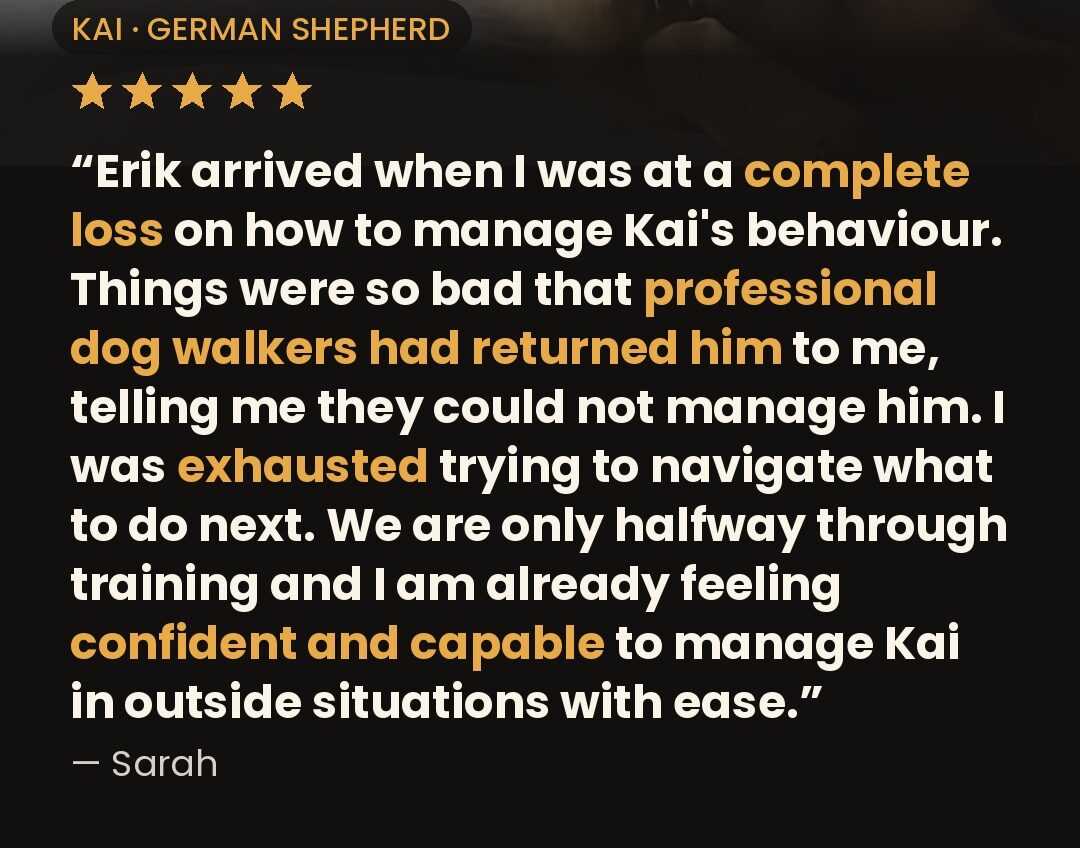
Kai is an adolescent German Shepherd whose dog reactivity escalated despite working with three separate force-free dog trainers. By the time his owner, Sara, contacted me, the situation had become untenable. Being a relatively small person, walking Kai safely was no longer physically possible. The dog walkers she previously relied on had quit, and her most recent force-free trainer could no longer walk him either.
It is easy to see how an owner in this position could conclude that behavioral euthanasia is the only path forward. But before making a final decision from which there is no turning back, Sara decided to make one last roll of the dice: a balanced dog training approach where tools like e-collars, prong collars, and slip leads were left on the table. In the current climate, that is a brave decision, euthanasia is somehow framed “kinder” than putting a prong collar on a reactive dog. That fact alone should give anyone pause
During my first conversation with Sara, it sounded like Kai was a dangerous, out-of-control dog. Out of control? Certainly. Dangerous? Absolutely not.
Meeting him made three things immediately clear:
The combination of those three factors, mixed with a lack of structure and strictness, created a dog that was unmanageable, that said, this was absolutely not a “dangerous” dog or a dog beyond help.
Also read this post to understand why dogs do what they do, unless there is a pathology, there’s always a reason.
In the standard force-free framework, trainers rely primarily on positive reinforcement and negative punishment. Under ideal laboratory conditions with absolute environmental control, skilled behaviorists can achieve a lot through management, desensitization, and threshold manipulation.
But the structural bottleneck appears when you step out of the lab and into the real world with an owner living in an estate full of dog owners, some more responsible than others, controlling the environment perfectly was not possible unless we would confine the dog to 5am and 11pm walks, which is not fair on dog nor owner if you ask me.
With unpredictable dog owners potentially around every corner, reactivity blow outs were as well.
Everyone understands positive reinforcement. Negative punishment simply means the removal of something the dog wants. It can be an excellent way of punishing a dog and reducing certain behaviours, but with high-drive working breeds, it can create a massive structural problem when misapplied.
To understand why, you have to look at what separates a working breed like a German shepherd from a companion dog: Drive. Working dogs are essentially dopamine and adrenaline junkies. They are willing to literally run through a brick wall to get their fix. That is what makes them phenomenal at the jobs they were bred to do, but awful standard pets.
If a lower drive pet Golden Retriever pulls toward another dog, the owner stops walking as a means of using “negative punishment”. The dog might very well think, “Oh, if I pull, we stop. Therefore, I should stop pulling.” If a working-line dog pulls toward another dog and you hold him back, he thinks, “Getting to that dog is highly desirable. I am being physically restrained, so I need to fight harder and escalate to get there.”
The more you hold him back or even remove him from the trigger, the more frustrated and obsessed he becomes. In fact, this exact principle of restraint and frustration is intentionally used in working dog sports to build drive for a bite sleeve or a ball. The methodology heavily relied upon by positive-only trainers who aren’t too familiar with working breeds routinely backfires on working breeds because it ignores the biological reality of how these animals are wired.
There is another fundamental disconnect within the force-free community: the luxury of time.
Under perfect conditions, with flawless environmental management, a lot can theoretically be achieved without compulsion. But real life rarely offers perfect conditions. When you are dealing with a dog that is already genetically predisposed to reactivity, has rehearsed the bad behavior hundreds of times, and has had that frustration amplified by poorly applied negative punishment, time is not on your side.
Add an owner who is exhausted, stressed, and entirely at their wits’ end, and the reality becomes stark. We can convince a struggling owner to stick with a structured, effective rehabilitation process for a few months. We cannot ask them to live in misery for years hoping for a breakthrough that may never come.
While the Force Free industry fixates entirely on the welfare of the dog, we have a moral obligation to equally consider the severe psychological and physical toll the situation takes on the owner, their family, and the wider community.
For four weeks, we removed Kai from all trigger situations to avoid rehearsal while we built a foundation of communication and obedience.
With these four markers, training stops being a guessing game of trial-and-error and becomes a clean, transparent dialogue.
Only after this foundation was proofed in low-distraction environments did we bring Kai back into the real world.
With the mechanics installed, we started to counter condition by marking and rewarding heavily every time he would notice a dog but did not react at distance.
We also made the “heel” command an active job. Heeling means heeling. It does not mean sniffing, marking, or barking at other dogs. We give him plenty of structured free time to sniff and act like a dog, but only after he earns it by executing his job to satisfaction. Disengaging before being freed results in a correction, while remaining engaged results in massive reward.
we moved to public spaces. If Kai disengaged from his work or reacted to a trigger: pressure on. When he returned to the job: pressure off and instant and constant reward. We are trying to make things black and white: Stay engaged with us and life is going to be super rewarding, disengage and start doing unwanted behaviour and life won’t be so rosy. And other dogs, cats, pedestrians just become background noise overtime not worth the attention
It is important to point out we are not “correcting” reactivity, we are correcting the dog disengaging from the “job” it’s been given
A little over two months later, with the first several weeks dedicated entirely to foundational mechanics in the yard, Sara can walk her dog again.
Is he 100% fixed? Not yet. But let’s remember where we started: a reactive German Shepherd on his last chance who failed out of multiple force-free programs. We took a dog who was unwalkable by professionals and made him walkable by his owner. We saved his life by installing obedience and clear boundaries. We will continue proofing his progress across multiple contexts until he is entirely neutral, but the path forward is finally clear.
Let’s be clear about why immediate control had to be the priority: the situation was genuinely dangerous. Not necessarily because Kai was going to attack a person or even another dog, though the risk was there, but because there was a very real, physical hazard of Sara being dragged into traffic (or even just the ground) during one of his blowouts, as already had happened to a trainer. When safety is compromised to that degree, you cannot philosophize your way out of a crisis through idealism.
Now that we have established that control, our goal shifts from mechanical compliance to addressing his underlying emotional state.
From here on out, the work moves into controlled group sessions. We expose Kai to other dogs and triggers at a safe, manageable distance, running systematic counter-conditioning protocols. By pairing the presence of triggers with high-value rewards and active play while the triggers remain in the background, we are changing how his brain actually perceives them. The triggers transform from predictors of frustration and chaos into background noise that signals an opportunity for engagement and reward.
We gained control to save the dog’s life and protect his owner; now we are using that control to reshape how he feels about the world around him.
A common critique of balanced training methods is that the dog merely complies out of fear or brute force. That argument misses how the mechanics actually operate. The value in the alternative behavior: engagement, focus, and clarity, is built entirely through positive reinforcement, play, and high-value rewards. What the balanced approach adds is a clear layer of accountability: “You have to do this now; I’m not asking.” While that may sound harsh to an outsider looking through an anthropomorphic lens, with working dogs of this caliber, reliable control is not an aesthetic luxury. It is a vital safety requirement.
Another frequent objection is that balanced training only suppresses symptoms without addressing the dog’s underlying emotional state. Once again, that is entirely untrue. By systematically building genuine value in the alternative behavior, that choice becomes inherently rewarding. Furthermore, you actively shift their internal state by making the reactive outburst completely un-rewarding and impossible to sustain.
When you interrupt the chaos of a dog’s own frantic reactivity and replace it with clear, fair leadership, the dog doesn’t look stressed or shut down, quite the contrary. Kai didn’t look defeated; he looked relieved because the exhausting burden of making decisions was finally taken off his shoulders.
If you are struggling with a reactive working breed and need clear, results-driven balanced training in West Wicklow, Kildare, or South Dublin, contact Pluto & Co K9 for an evaluation.
I am proud to announce
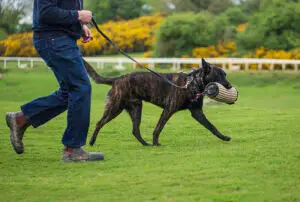
You cannot comfort a dog out of anxiety. When you shield a nervous dog from every stressor, you are teaching them that the world is dangerous and avoidance is the only strategy. Here is the reality of why your dog is anxious, and the exact mechanics of how to fix the confidence deficit.

Are you being ignored by
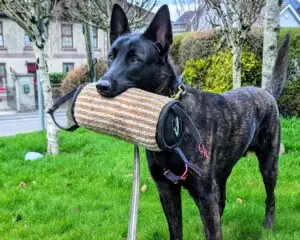
Dog Training Explained (Dublin, Kildare,