The Anxious dog: How Shielding from Stress Creates Long-Term Anxiety and what to do about it instead
There is a fundamental flaw in how modern dog ownership handles anxiety. The default instinct is to protect, soothe, and avoid triggers at all costs.
Let’s be clear: management is sometimes necessary. If a dog is red-lining, rehearsing explosive behavior, and genuinely unable to think, creating distance is the correct tactical move. But when avoidance becomes your entire system, you are systematically dismantling the dog’s ability to cope.
Anxiety in dogs is rarely just a temporary emotional state; it is a mechanical deficit in coping skills. The dog does not know how to recover, solve problems, or move through uncertainty. This stems from a combination of genetics, a lack of exposure, accidental reinforcement, and unclear handling.
Here is what is actually happening.
Anxious dogs need a different approach
1. The Problem with Shielding
Confidence is a learned skill, not a default state. Dogs learn resilience through a specific behavioral sequence:
Manageable Stress → Effort → Success → Recovery
When a handler anticipates a stressor and immediately bails the dog out before they have a chance to process it, the dog never experiences the recovery phase. The takeaway for the dog is simple: The environment is dangerous, and avoidance is the only survival strategy. Shielding creates a behavioral vacuum where active confidence should be.
2. Accidental Reinforcement and Handler Pressure
Human psychology fundamentally clashes with canine mechanics here. When a dog is exploding at a trigger: Lunging, barking, or in full panic; the human instinct is to apply physical touch and soft verbal reassurance.
Technically speaking, you cannot reinforce the underlying emotion of fear with comfort. However, you absolutely can and do reinforce the outward behavior. More importantly, to a sensitive dog, that hovering, tense, “soothing” energy is just added social pressure. You are adding emotional weight to a dog that is already struggling.
The dog does not need comfort in that moment. The dog needs clarity. They need calm handling, clear direction, and a job they know how to execute to redirect their brain state.
3. The Reality of Genetics
Genetics load the gun. We routinely see dogs with weaker nerves, higher sensitivity, lower thresholds for recovery, or stronger defensive instincts. That is a biological reality.
But poor genetics are never an excuse to avoid training. In fact, a genetically nervous dog requires more structure, not less. You cannot rewrite a dog’s DNA, but you can install a predictable framework of rules, clear communication, and successful repetitions that allows them to navigate the world with certainty.
The Strategy: Overcoming anxiety and building Confidence and resilience
We have to stop obsessing over managing what the dog is afraid of, and start actively building the dog’s ego and ability to cope.
Structured Play and Possession
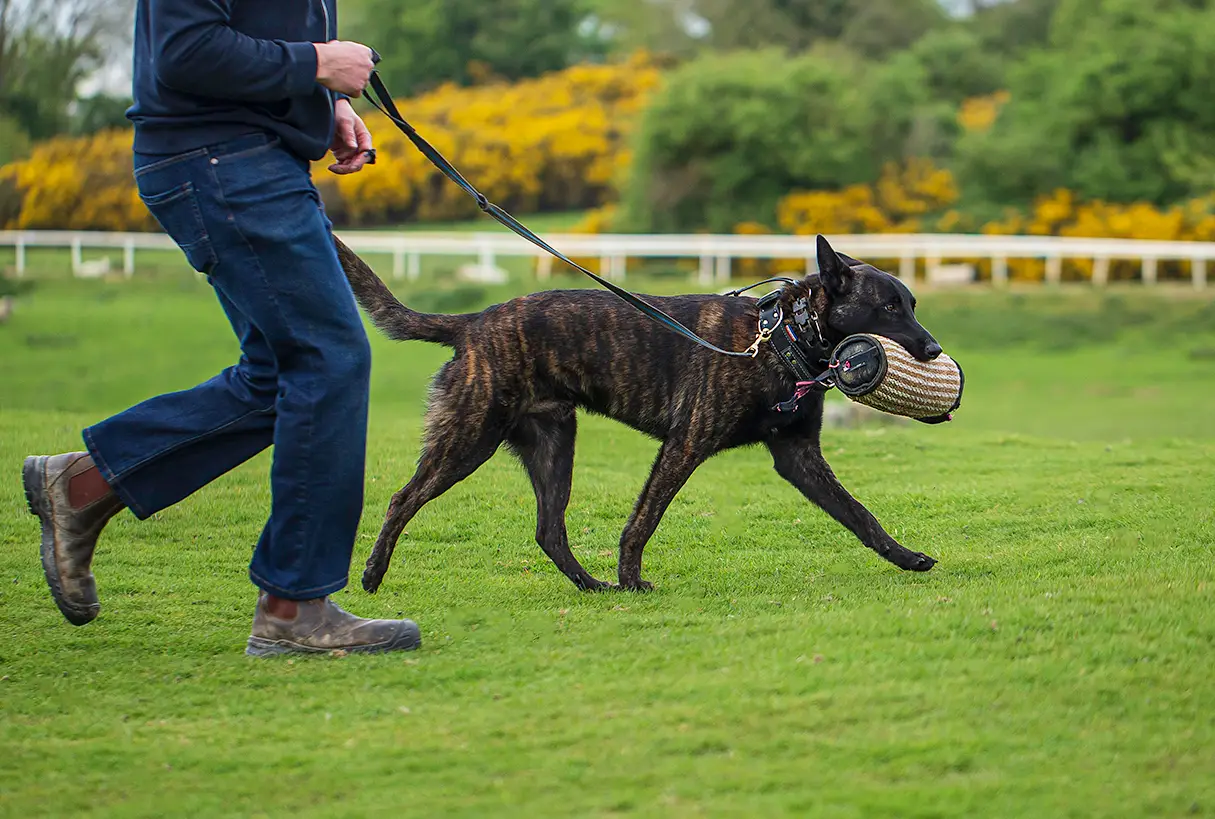
Play is not just physical exercise; it is behavioral modification. Engaging the dog in structured tug and possession games builds active confidence.
When a dog learns the rules of engagement (when to strike, how to grip, when to out) and is allowed to physically overpower the handler and win the item, their posture changes. You are teaching a nervous dog how to feel powerful and capable.
Controlled Environmental Pressure
Confidence requires successful exposure to mild stress. Take the dog to novel environments—an empty car park, different surfaces, a low wall, or unfamiliar objects on the ground. The objective is controlled challenge, not flooding.
The sequence must be applied deliberately. When the dog realizes they can navigate the obstacle and nothing bad happens, stress transforms into experience.
Problem Solving and Independence
A confident dog knows how to figure things out. If you lure a dog through every single repetition and rescue them from every mistake, they never learn to think.
Utilize free shaping. Let the dog offer behaviors and figure out how to unlock the reward. When a dog realizes that their own actions dictate the outcome, it directly counters the feeling of helplessness that defines anxiety.
The Takeaway
Stop trying to protect your dog from the entire world. Protect them from being overwhelmed, but do not protect them from the challenges they need to grow.
To build a genuinely confident dog, you must provide:
- Clear rules to remove uncertainty.
- Controlled exposure to turn stress into experience.
- Structured wins through possession and play.
- A calm handler who provides direction rather than emotional pressure.
That is how you build confidence. Not by shielding the dog from stress forever, but by teaching the dog how to move through stress and come out stronger.
If you want to learn how to actually play with your dog in a way that is both engaging and confidence building? Book your free consultation HERE.
We cover Co. Wicklow, Kildare and Dublin for 1-1 sessions!
If you want to stay updated on everything that goes on, sign up for our newsletter here, and a blueprint to help you get started overcoming anxiety-based reactivity HERE.