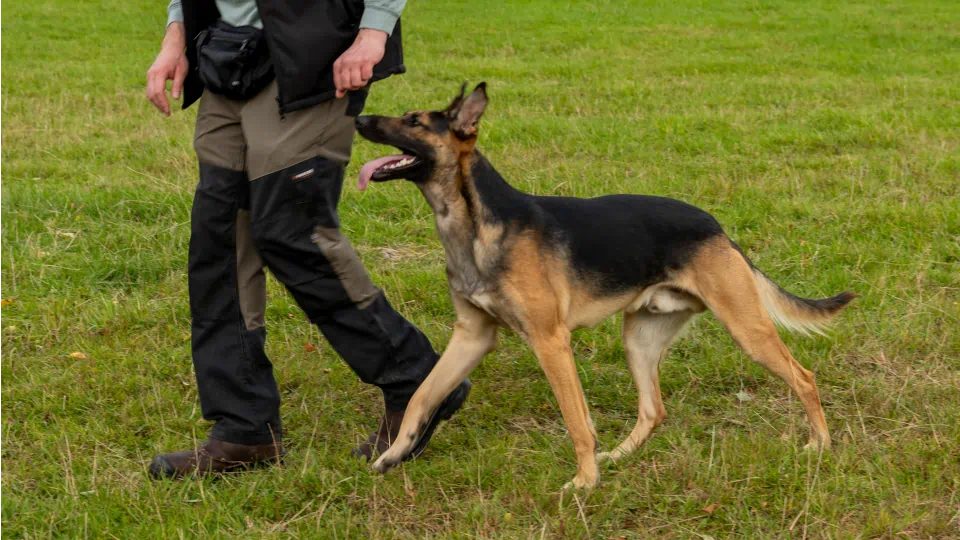
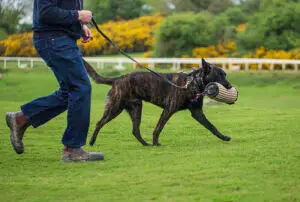
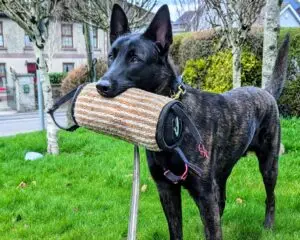
Some dogs are bred to do work most people can barely imagine. Police and military lines of Malinois, German Shepherds, and Dutch Shepherds are the canine equivalent of a young Mike Tyson.
Think about it: for a 30kg dog to be able to chase down and apprehend a 100kg man is no small feat, yet these dogs are bred to do exactly that. They are wired differently from the average pet dog.
Here’s the challenge. Through unethical breeding practices, dogs from these working lines are increasingly ending up in pet homes with owners who have no idea what they’re dealing with. When a dog like this goes into the kind of drive needed for that level of work, a drive that is innate, not trained, getting them back under control is an uphill battle.
And ask yourself this: if such a dog ever redirected and seriously injured another dog or a person, would you really want your only tool to be a bag of treats? In moments like that, every owner wishes they had more than one option.
Why Reward-Only Falls Short
Positive reinforcement is the foundation of good training. Rewards create motivation, build drive, and make learning enjoyable. For many pet dogs, that is enough. But for high-drive dogs bred to work at extremes, the environment is often more rewarding than anything an owner can offer.
The thrill of the chase, the surge of adrenaline, the satisfaction of biting down, these things can blow past the value of food or toys in an instant. If a dog learns they can always self-reward by ignoring you, rewards alone lose their power.
Clarity and Corrections
Training is not just about rewarding good choices. It is also about providing clarity when the dog makes the wrong choice.
Sometimes that means the dog experiences a correction. This is not about harshness or anger, it is about communication. Think of it as hot/cold feedback: the dog understands when they are moving in the right direction and when they are not.
With this balance, the dog learns:
- Good choices bring good things.
- Wrong choices bring outcomes they prefer to avoid.
- The handler is always worth paying attention to.
The Goal is Balance
Reward-based methods remain the foundation. But for high-drive dogs, real-life distractions often outcompete food or toys. Without balance; engagement, clarity, rewards, and fair corrections when necessary, owners are left frustrated, and dogs remain unpredictable.
The goal is not to diminish the value of rewards, but to show the dog how to succeed in every environment. Rewards build motivation, corrections provide clarity, and together they create a system the dog can trust.
Final Word
High-drive dogs deserve more than one-size-fits-all training. They need structure, consistency, and clear communication that includes both reward and correction. When that balance is achieved, their intensity becomes precision, their energy becomes drive, and the relationship between dog and handler reaches its full potential.
📌 At Pluto & Co., I specialize in helping owners of high-drive working dogs build engagement, clarity, and reliability. If you feel overwhelmed by the power of your dog, I can help you turn chaos into control.