In today’s training world, the word “correction” often sparks debate. Some believe that training should rely only on rewards. Others understand that dogs, especially high-drive working breeds, need both motivation and clarity to succeed.
A correction is not punishment. It is not anger. It is communication. Think of it as hot-cold feedback. Rewards tell the dog when they are on the right track. Corrections tell them when they are moving in the wrong direction. Both are necessary for a clear conversation.
For high-drive dogs like Malinois, Dutch Shepherds, and German Shepherds, the environment often rewards bad decisions more than food or toys reward good ones. The thrill of chasing, biting, or pulling can instantly outweigh any treat. Without fair corrections, the dog learns that ignoring the handler has no consequence.
The key is fairness. A correction must be timed correctly, delivered calmly, and scaled appropriately. It should never be harsh or emotional. Used properly, it helps the dog understand boundaries and builds reliability. Without clarity, dogs become frustrated, and owners lose trust in the training process.
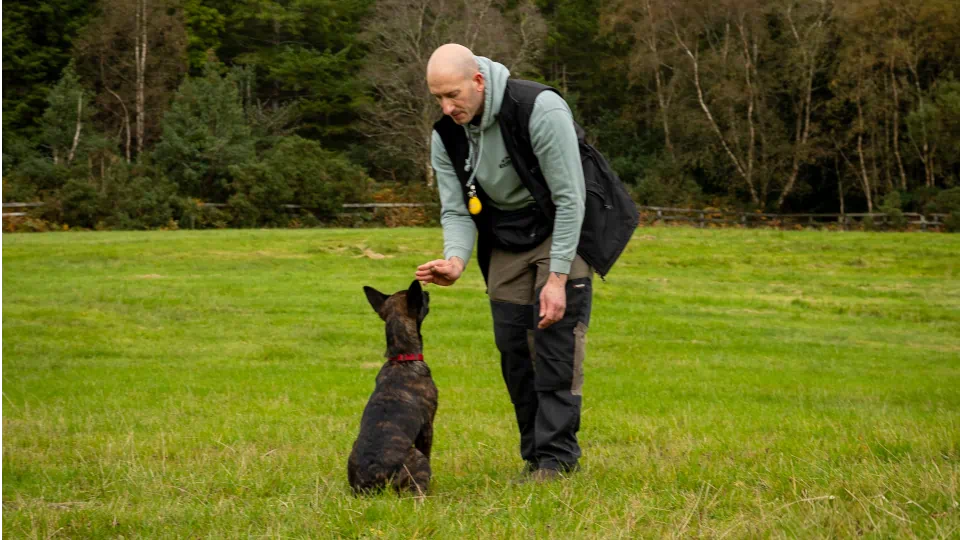
When I worked with Pluto and later Kayan, I saw firsthand how balanced training built trust. Rewards motivated them, but corrections gave them clarity. The combination produced dogs that understood what was expected, respected boundaries, and still trained with drive and enthusiasm.
Corrections are not cruel. Confusion is cruel. Balance creates a system the dog can trust – one where rewards build motivation, corrections provide clarity, and the relationship grows stronger with every session.