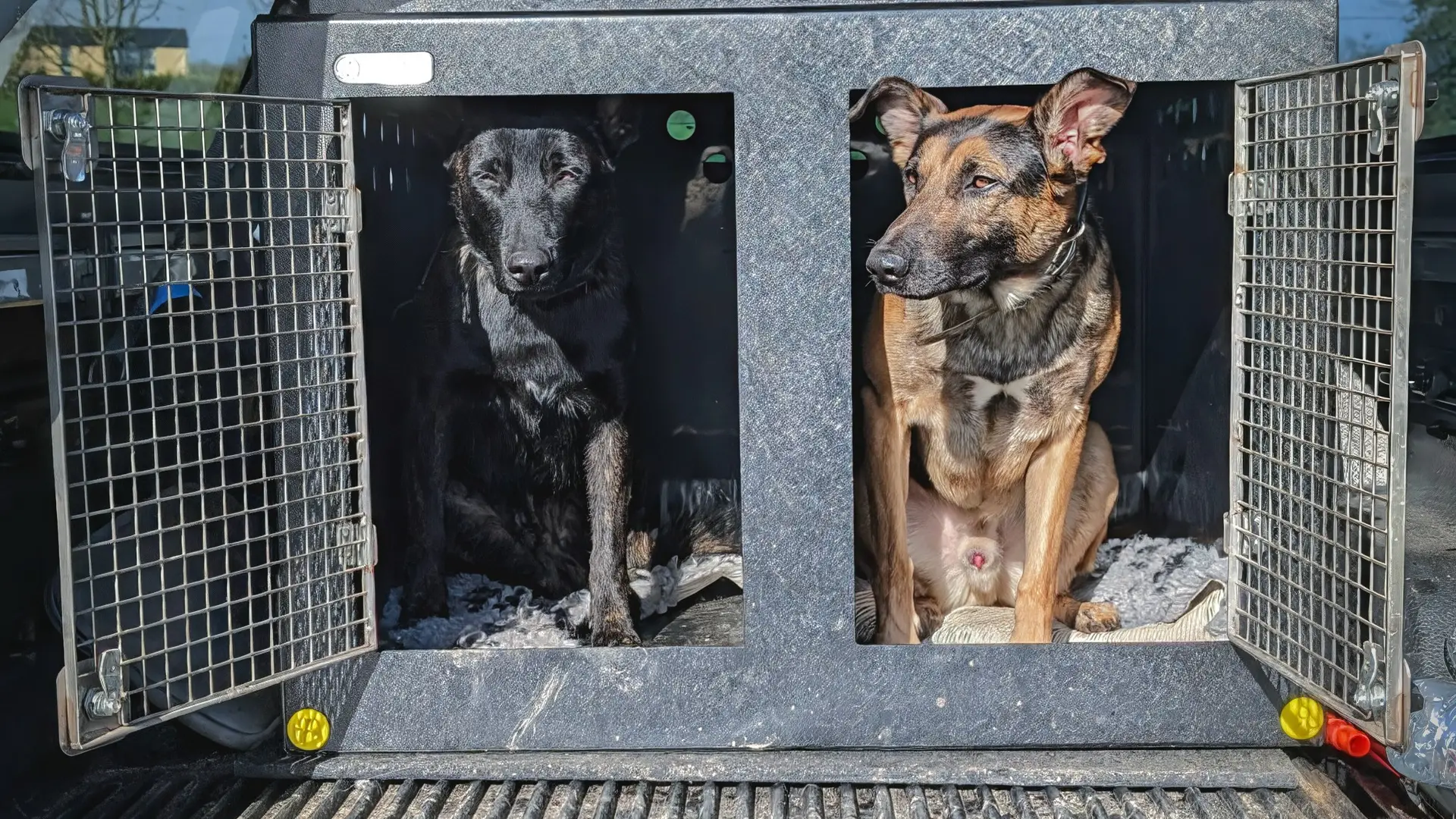
Most owners transport their dogs loose in the cabin or secured with a basic harness. Unfortunately, many of these harness systems fail in high-speed collisions. In a high-impact crash, a 30kg dog becomes a projectile, capable of causing fatal injuries to both the animal and the human passengers.
It is a grim reality, but one we must acknowledge.
For a long time, I limited trips with my dogs to the absolute essentials. Unless it was for the training field or a vet visit, they stayed home. I wouldn’t risk their safety without a proper solution. Now that I have a crash-tested setup, that has changed. Training sessions, hikes, club days, and road trips are back on the agenda. Life gets bigger for both you and your dogs when you know they are traveling safely.
For those of us with high-drive working dogs, structure and safety are non-negotiable parts of responsible ownership. Transport is no different. This is why I chose the DT Box.
1. Crash-Tested Security
The primary reason I chose the DT Box is simple: it is crash-tested.
In a collision, the box is engineered to keep the dog contained and manage impact forces far more effectively than a seatbelt or a wire crate. This protects the dog from being thrown, and it protects the driver from a high-velocity impact from within the vehicle. For me, this was the single most important feature.
2. Practicality: Cleaner Vehicles
Anyone who works dogs knows the reality of muddy fields, wet coats, and sand. One of the immediate benefits of the DT Box is vehicle hygiene. Mud, hair, and debris stay confined within the crate rather than spreading across your upholstery.
3. Maintenance and Durability
These boxes are built for heavy use, not aesthetics. They feature an integrated drainage hole, allowing you to hose them out after a messy session. Water in, dirt out, no struggling with fabric liners or damp smells. When you work your dogs regularly, this level of utility is essential.
4. Manageable Weight
Despite their rugged construction, DT Boxes are surprisingly light. Because they are manufactured from high-grade plastic rather than heavy-gauge steel, they are manageable for one person to move. You can transition the box in and out of the vehicle without a full weightlifting session.
The Trade-offs
No equipment is perfect, and there are two main factors to consider before buying:
- Footprint: These boxes are large. You need a vehicle that can properly accommodate them—in my case, a pickup truck was the best fit to ensure a dedicated, safe space.
- Investment: A DT Box typically costs between €700 and €800. It is a significant investment. However, when you calculate what we spend on food, veterinary care, and training, cutting corners on the one thing that protects their life during transport doesn’t make sense.
Final Thoughts
This comes down to responsibility. We ask a lot of our dogs; we train them hard and bring them into demanding environments. The least we can do is ensure they arrive and return safely.
With the setup finally dialed in, I’m looking forward to more time on the road. As an added bonus, DT Boxes are manufactured in Northern Ireland. Supporting a local manufacturer producing professional-grade equipment for the Irish K9 community is a choice I’m happy to make.