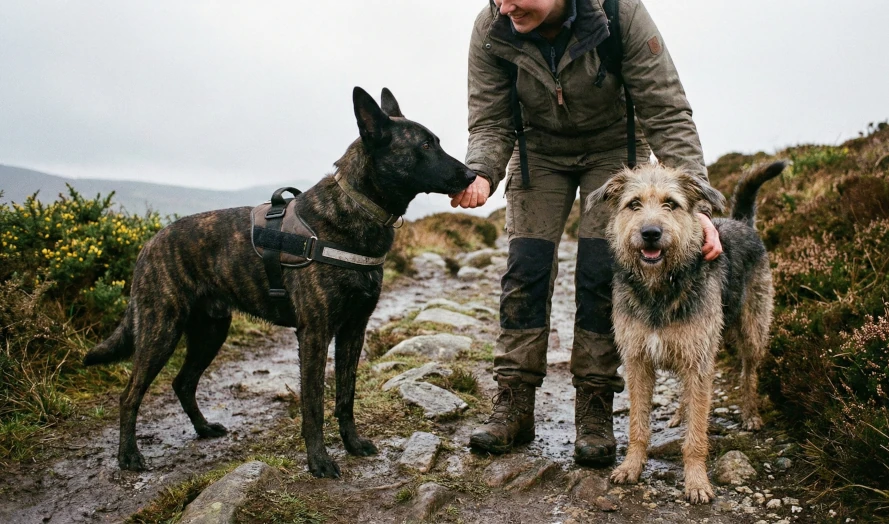
Most people choose dogs based on how they look. A striking German Shepherd in a film. A sleek Malinois at a police demonstration. A powerful Dutch Shepherd at a park in South Dublin.
But here’s the uncomfortable truth: choosing a dog based on looks is a recipe for disaster.
I’ve seen it countless times. Someone falls in love with the idea of a working breed—the intelligence, the loyalty, the presence, only to find themselves overwhelmed six months later into owning one. They end up with a dog they can’t control, can’t tire out, and can’t understand.
The dog ends up in a shelter. Or worse, living a frustrated, unfulfilled life in a home that can’t meet its needs.
It doesn’t have to be this way.
The Vision Exercise: Start Here, Not With a Breed
Before you even think about which breed to get, you need to answer one critical question:
What does the perfect dog look like to YOU?
Not to Instagram. Not to your mate who has a “cool” dog. Not to the breeder trying to sell you a puppy.
To you. In your actual life.
Grab a notebook. Get honest. And work through these questions:
1. What Does Your Daily Life Actually Look Like?
Do you work from home, or are you gone 9+ hours a day? Do you live in a flat, a housing estate in Kildare, or on rural property in West Wicklow? Are there young children in your home, or elderly family members who might struggle with a high-energy dog?
Are you the type who’s out hiking the Wicklow mountains on weekends, or do you prefer quiet evenings on the sofa?
Why this matters: A Malinois bred for police work will destroy your flat if you’re gone all day. A high-drive German Shepherd will become neurotic without structured outlets. These aren’t “bad dogs”, they’re dogs in the wrong homes.
2. What Do You Want to DO With Your Dog?
Be specific. Do you want a dog who joins you on trail runs and adventures? One who competes in dog sports like IGP, agility, or obedience? Are you looking for a protection or service dog with real working ability? Do you need a calm, reliable companion who can settle in public spaces around Dublin? Or are you after a dog with natural guarding instincts to protect your property?
Why this matters: Different genetic lines within the same breed are selected for different purposes. A show-line German Shepherd and a Czech working-line GSD are completely different dogs. One might suit your vision; the other could be a nightmare.
3. How Much Time Can You REALLY Invest?
Not in the honeymoon phase when the puppy is cute. Six months in. Two years in. When life gets busy.
Can you commit to 1-2 hours of training and exercise daily? Will you attend training classes weekly, even when it’s inconvenient? Can you provide mental stimulation—scent work, puzzle games, structured training—on top of physical exercise?
Why this matters: Working breeds don’t just need exercise: they need jobs. A tired working dog isn’t one who’s been walked for an hour. It’s one who’s been mentally engaged, given clear structure, and allowed to use its genetics constructively.
If you can’t honestly commit to this, a working breed isn’t for you. And that’s okay.
Matching Your Vision to Reality
Once you’ve answered these questions, you can start thinking about breeds—and more importantly, bloodlines within breeds.
Here’s what most people don’t realize: genetics matter more than breed labels.
Example: German Shepherds
- Czech Working Line GSD: Selected for high drive, stamina, and resilience. These dogs have strong nerves and stay stable under pressure. They’re bred with natural suspicion and hardness for protection work.
- Reality: Not suitable as a pet for most families. Requires experienced, firm-but-fair handling.
- Show Line GSD: Selected for conformation—looks, movement, and coat quality. These dogs typically have a calmer, more balanced temperament, with moderate working ability that takes a backseat to aesthetic appeal.
- Reality: Still not suitable for most pet homes, but there’s more chance of success with proper training and structure.
Same breed name. Completely different dogs.
Example: Dutch Shepherds
- KNPV Dutch Shepherd: Bred purely for performance in police and military work. These dogs have extreme drive, high aggression thresholds, and are physically and mentally resilient. They’re often dominant and “handler-hard.”
- Reality: Not suitable as a pet. Period.
- FCI Dutch Shepherd: Bred for conformance to breed standard, with pedigree purity as the priority. These dogs have a more balanced temperament and lower drive than KNPV lines, though they’re still working dogs.
- Reality: Still not suitable for most homes, but manageable with proper training and structure.
My Vision (And How It Shaped My Choices)
Let me share my own journey as an example.
When I decided to get a working breed, I had a clear vision: Highly trainable. High energy but with an “off-switch.” Adventure companion. Interest in protection sports like IGP. Inspired by the STSK9 methodology and the caliber of dogs they produce.
Based on this, I chose an FCI Dutch Shepherd from Pommeraie des Loups bloodlines, not KNPV, not a rescue, not a backyard breeder.
That dog is Kayan. He’s everything I envisioned: focused, high bite drive, suitable for ring sport. High food and prey drive. Handler-focused with an off-switch. Strong guarding instincts.
But here’s the critical part: despite being well-tempered, Kayan could be an absolute liability in the wrong hands. He has a level of natural aggression, which means I need to be vigilant about preventing reactivity. He’s not a pet. He’s a working dog living a structured, fulfilled life here in Ireland.
What About Pluto?
Pluto, my other dog, is a different story, and honestly, the more important one.
He’s a shelter dog. Six months old when I adopted him. Genetic background unknown. Difficult start to life. He’s high energy but low drive. Chaotic, difficult to train. Not suitable for protection sport.
But here’s the truth: Pluto is the dog who made me who I am today.
If I’d done the vision exercise first, I wouldn’t have adopted him. He didn’t match my goals. I wasn’t equipped to handle him at the time.
But Pluto sent me down this rabbit hole. He taught me patience, creativity, and how to build drive in a dog who didn’t come pre-wired for it. He forced me to become a better trainer, to dig deeper.
I love him to death, possibly even more than Kayan, because we’ve been through the ringer together. Every small win with Pluto feels monumental. Every breakthrough is earned.
Kayan is brilliant, but Pluto is my heart.
So when I say “do the vision exercise,” I’m not saying you should avoid the hard dogs. I’m saying you should know what you’re signing up for, and be ready to meet that dog where it is.
The Hard Truth
If your vision doesn’t align with the reality of working breeds, don’t get one.
There’s no shame in choosing a breed that actually fits your life. A Labrador. A Cavalier King Charles Spaniel. A mixed-breed rescue with a calm temperament.
But if you’re committed, if you’ve done the vision exercise and you’re ready to meet a working breed’s needs, then you’re already ahead of 90% of people who get these dogs on impulse.
Next Steps
- Complete the vision exercise. Be brutally honest.
- Research bloodlines, not just breeds. Understand what different lines are selected for.
- Find an ethical breeder who asks YOU questions and matches puppies to homes. (More on this in a future post.)
- Prepare for the long game. Raising a working breed isn’t a 6-month project—it’s a lifestyle.
Working breeds aren’t for everyone. But if you do the work upfront, you’ll avoid heartbreak—and give an incredible dog the life it deserves.
Need help assessing whether a working breed is right for you? Whether you are based in West Wicklow, Kildare, or South Dublin, I can help guide you on choosing the right bloodline or training the dog you have.
Get in touch.