If you share your home with a German Shepherd, Malinois, Dutch Shepherd, or any high-drive working breed, you already know the truth: these are not standard pets.
Dog owners in Ireland often find themselves in a difficult position. They seek help, only to find that standard training methods don’t stick. Cookie-cutter techniques designed for happy-go-lucky companion breeds often leave working dogs frustrated, anxious, or checking out completely. Conversely, heavy-handed compulsion can destroy the bond you have with your dog.
Working breeds require structure, biological fulfilment, and a handler who understands their genetics. Here is how to identify if a training method isn’t fit for purpose, and what effective working breed training actually looks like.
5 Red Flags to look out for when selecting a dog trainer
1. They Push for “Dog Park Socialisation”
For the average family pet, a dog park can be fine. For a high-drive Malinois or Shepherd? It is often a recipe for behavioural issues.
Working breeds do not need to be “friends” with every dog in the neighbourhood. They need neutrality. Uncontrolled play in dog parks frequently builds bad habits, such as overstimulation, reactivity, and ignoring the handler in favour of environmental chaos.
The Fix: A competent trainer prioritises engagement with you in the presence of distractions, not free-for-all play with strange dogs.
2. They Skip Relationship Building (Engagement)
If a trainer focuses immediately on “sit” and “stay” without discussing hand feeding, play, or engagement, they are missing the foundation.
Working breeds are genetically wired to cooperate with a handler. You should be the most interesting thing in their world: the source of all resources.
- Hand feeding: Builds focus and associates your presence with value.
- Tug and Play: Develops drive and creates a cooperative outlet for energy.
- Trading: Teaching the dog that “out” means an opportunity for reward, not a loss of the toy.
Without this biological bond, obedience is brittle and will likely fail under pressure.
3. They Try to Suppress the Dog’s Drive
Some trainers see high energy or intensity as a defect that needs to be “calmed down.” This is a fundamental misunderstanding of the working dog.
Your dog’s drive; whether prey, play, or defence, is the engine. You don’t want to break the engine; you want to install a steering wheel. Shutting down a dog’s natural impulses creates conflict and frustration. A skilled trainer knows how to channel that intensity into precision obedience and work.
4. They Lack Clear Boundaries
There is a paradox in training powerful dogs: they need the freedom to express their drive, but they also crave clear, non-negotiable boundaries.
If a training system is purely “force-free” with no consequences for poor choices, a high-drive dog will eventually push past you. These dogs are intelligent and opportunistic. They need to know that you are fair but firm. Effective training teaches accountability alongside reward.
5. They Confuse “Bribery” with Reward
There is a distinct difference between luring a dog with cheese (bribery) and paying a dog for a job well done (reward).
If your dog only complies when they see the food pouch, you don’t have obedience; you have a transaction. A well-trained working dog obeys because they respect the handler and understand the command creates access to the reward. The goal is intrinsic motivation and active obedience, not just following a treat.
The “Old School” Trap: Bad Advice to Avoid
While purely positive methods can lack structure, swinging too far the other way is equally damaging. Be wary of these outdated concepts:
The “Heavy Hand” Approach
Leading with corrections (leash pops, shouting, or e-collar stimulation) before the dog understands the task creates fear, not respect. While corrections have a place in proofing known behaviours, the foundation must always be built on clarity and motivation. We use minimum effective pressure to guide, not maximum force to punish.
“Don’t Let Him Get Obsessed with the Ball”
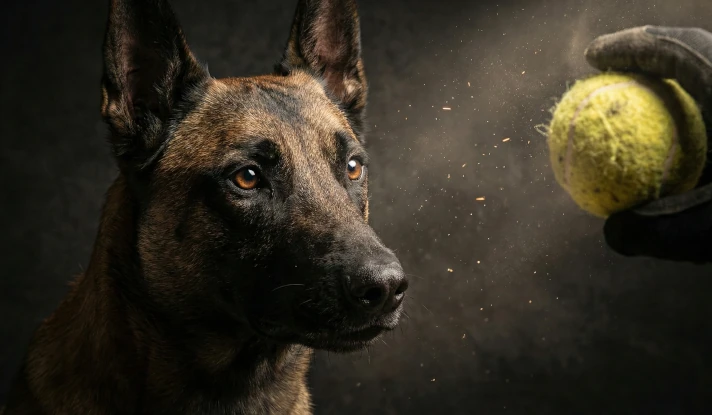
This is perhaps the worst advice a working breed owner can hear. For a detection dog, police dog, or sport dog, toy obsession is a gift.
That obsession is your strongest training tool. It allows you to build duration, speed, and focus. A trainer who tells you to suppress your dog’s ball drive is throwing away your biggest lever for success.
What Effective Training Looks Like
The right approach for your German Shepherd or Dutch Shepherd should feel like a partnership, not a battle. Effective training:
- Harnesses Genetics: Works with the dog’s natural instincts rather than fighting them.
- Builds Clarity: The dog knows exactly when they are right and when they are wrong.
- Creates Outlets: Channels energy into sport, play, or work.
- Uses Advanced Systems: Utilises modern methodologies like NePoPo® (Negative-Positive-Positive) to create a dog that does the work with heart and soul.
Working Breed Training in Wicklow & Dublin
If you are located in Wicklow, Kildare, or South Dublin and feel like you are struggling to manage your dog’s potential, we can help.
At Pluto & Co K9, we specialise in the unique needs of working breeds. We don’t rely on cookie-cutter pet training. We use proven systems (including STSK9 principles) to build clear communication and rock-solid reliability without breaking the dog’s spirit.
Ready to see what your dog is truly capable of? Contact Us